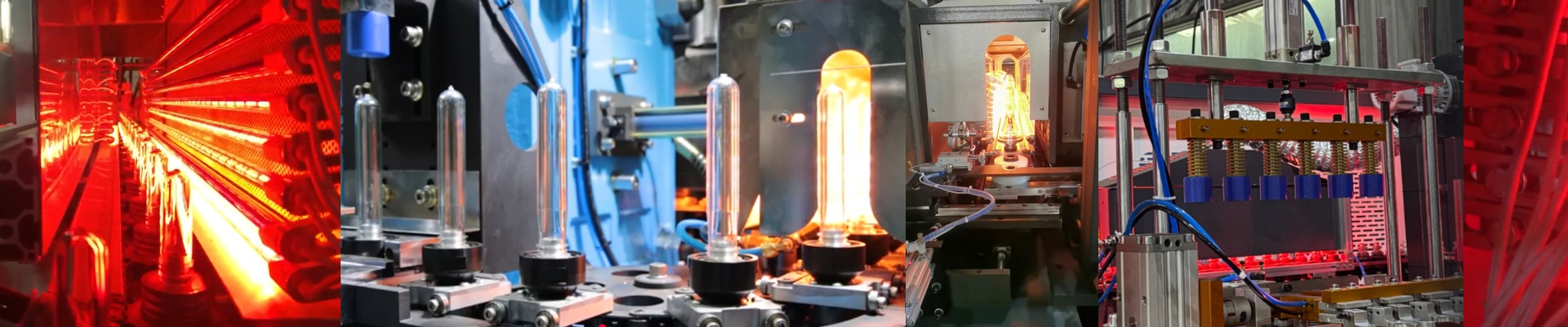
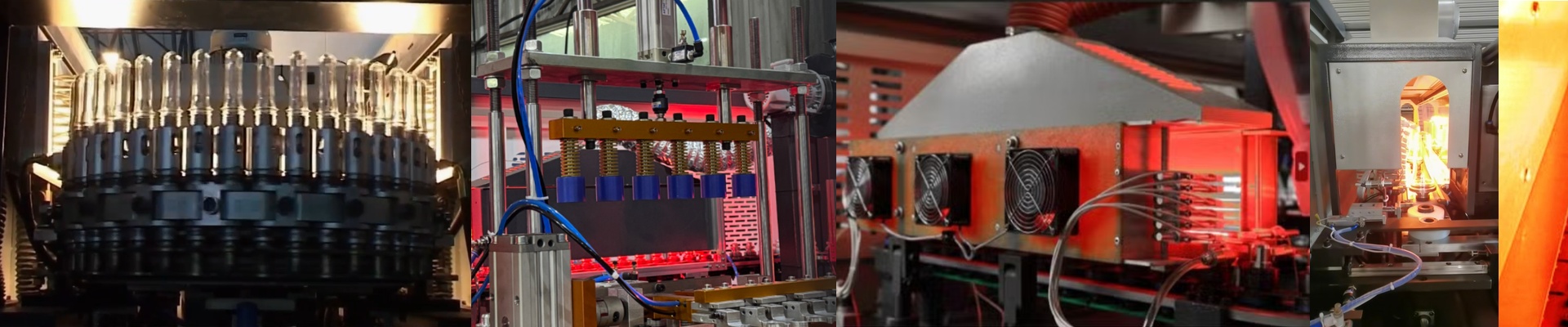
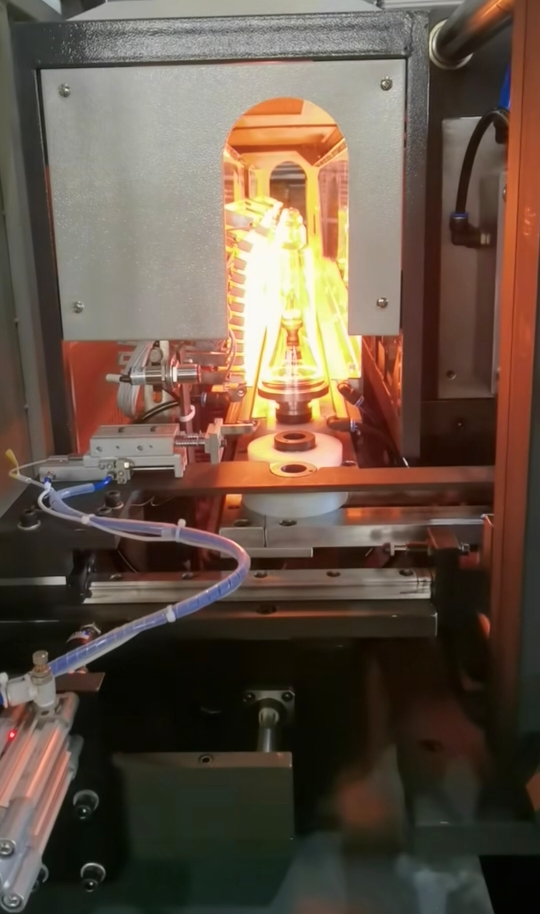
On the blow molding floor, preform heating is where you win or lose the cycle-time battle. A heater bulb that’s weak or drifts throws your stretch ratio off, and suddenly you’re scrapping bottles. You need an infrared emitter that holds tight temperature tolerance all through the run—not one that starts fading after a few thousand shots.
What matters under the hood
We build the copolyester preform heater bulb to deliver consistent infrared output inside the heating tunnel. The quartz envelope is tuned for short-wave infrared response, so the energy gets absorbed by the preform wall, not wasted as ambient heat. Filament geometry and reflector alignment are set to hit a defined heat profile across the neck and body, which keeps melt strength stable and wall distribution even. Specs are engineered to OEM tolerances: rated voltage and wattage per machine zone, standard R7s base or a custom connector, and controlled filament resistance. Every bulb goes through thermal mapping and end-of-line testing, so you get repeatable output—lamp after lamp.
Why it plays in stretch blow molding
With stretch blow molding, predictable heating is how you keep scrap down and output up. Our bulbs drop into Sidel, Krones, SIPA, Husky, SACMI, and Nissei ASB machines with 1:1 parameter matching, so you don’t have to re-tune the whole heating section after a replacement. Tighter temperature stability means fewer off-spec bottles, faster recovery after grade changes, and steadier line efficiency. The materials and build are OEM-backed, with documented inspection criteria and a supply chain that fits planned maintenance windows.
The shop-floor details that bite
Infrared bulbs are sensitive to handling. Install with clean gloves, seat the base properly, and torque to spec—otherwise you’ll get hot spots and premature failure. Match the lamp to the zone controller. Voltage, current, and cycle profile have to line up, or you’ll see output drift and uneven heating. Plan replacements around preventive maintenance, not breakdowns, and keep a spare set on hand. You can expect strong uptime, but treat the bulb as a wear item that needs disciplined installation and monitoring.