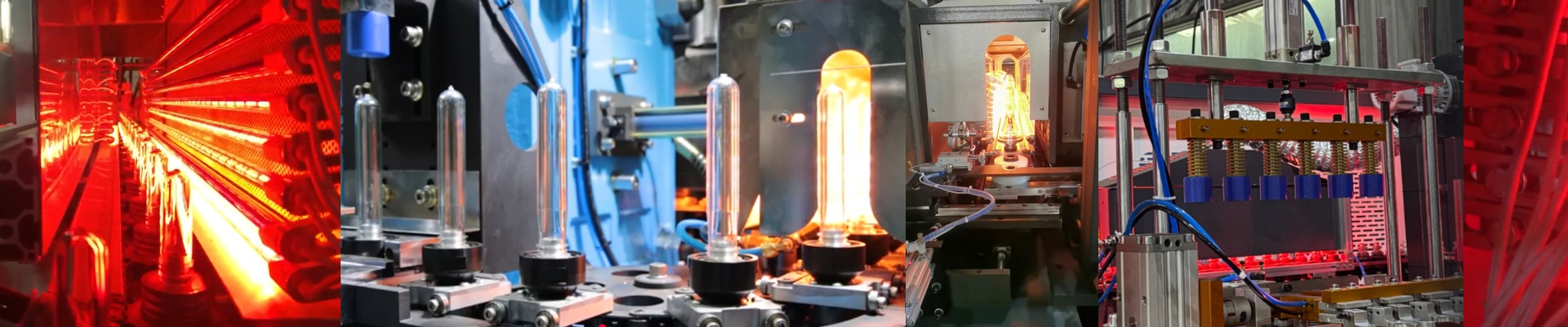
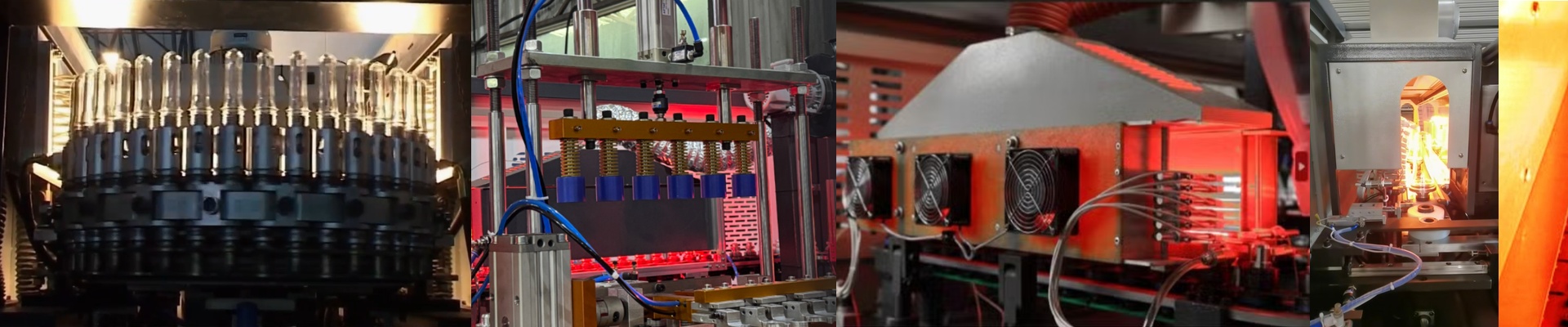
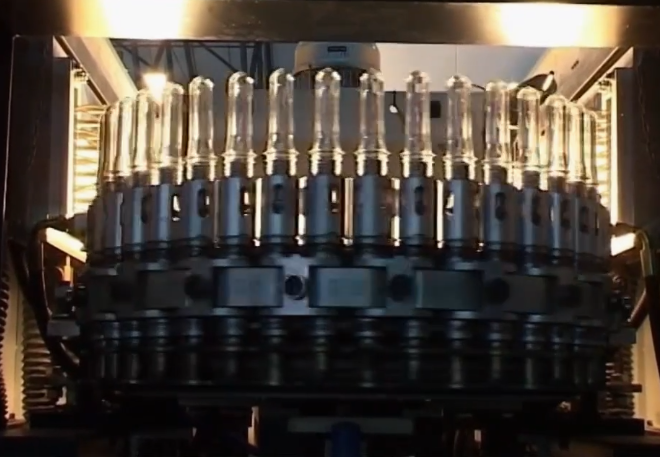
On the blow molding line, polycarbonate baby bottle preforms don’t give you much room to be sloppy. Underheat and the material stays stubborn, showing up as split seams and blown bottles. Overheat and you get yellowing, degradation—scrap you can’t write off. Hitting the mark starts at the heating bulb, where stable temperature and repeatable performance meet.
What matters, technically
We build the polycarbonate baby bottle preform heater bulb around short-wave infrared halogen technology. It snaps to temperature and holds the setpoint in the heating tunnel. Rated at 1200W and 230V, it uses a quartz envelope to handle rapid thermal cycling, and the standard R7s connector makes the retrofit straightforward. The dimensions match common OEM footprints, so you get a 1:1 fit without reworking holders or reflectors. The filament geometry and reflector coating are tuned to spread heat evenly across the preform wall—no hot spots, just consistent heating so you hit the stretch window cleanly.
Why this works on polycarbonate
Polycarbonate needs a tight, repeatable heating profile to give you the right melt strength for stretch blow molding. This bulb smooths out the heating curve, cutting time-to-temperature and tightening variance between cavities. So what does that mean on the floor? Fewer rejects, more consistent bottle weight, and a line speed you can actually hold. Energy use comes down, too, because the emitter comes up fast and holds setpoint efficiently—less idle loss. In practice, you get more bottles per hour without hammering the heating section.
The details that keep it honest
Installation is simple, but alignment isn’t optional. Keep the reflectors clean and the preform spacing correct; misalignment will still give you uneven heating, even with the right bulb. Before ordering, confirm voltage and connector type against your blow molder’s specs. Plan on peak performance up to 5,000 hours; after that, output drift starts to climb and you’ll be calibrating more often. Schedule replacements during planned maintenance so heating repeatability stays intact.